
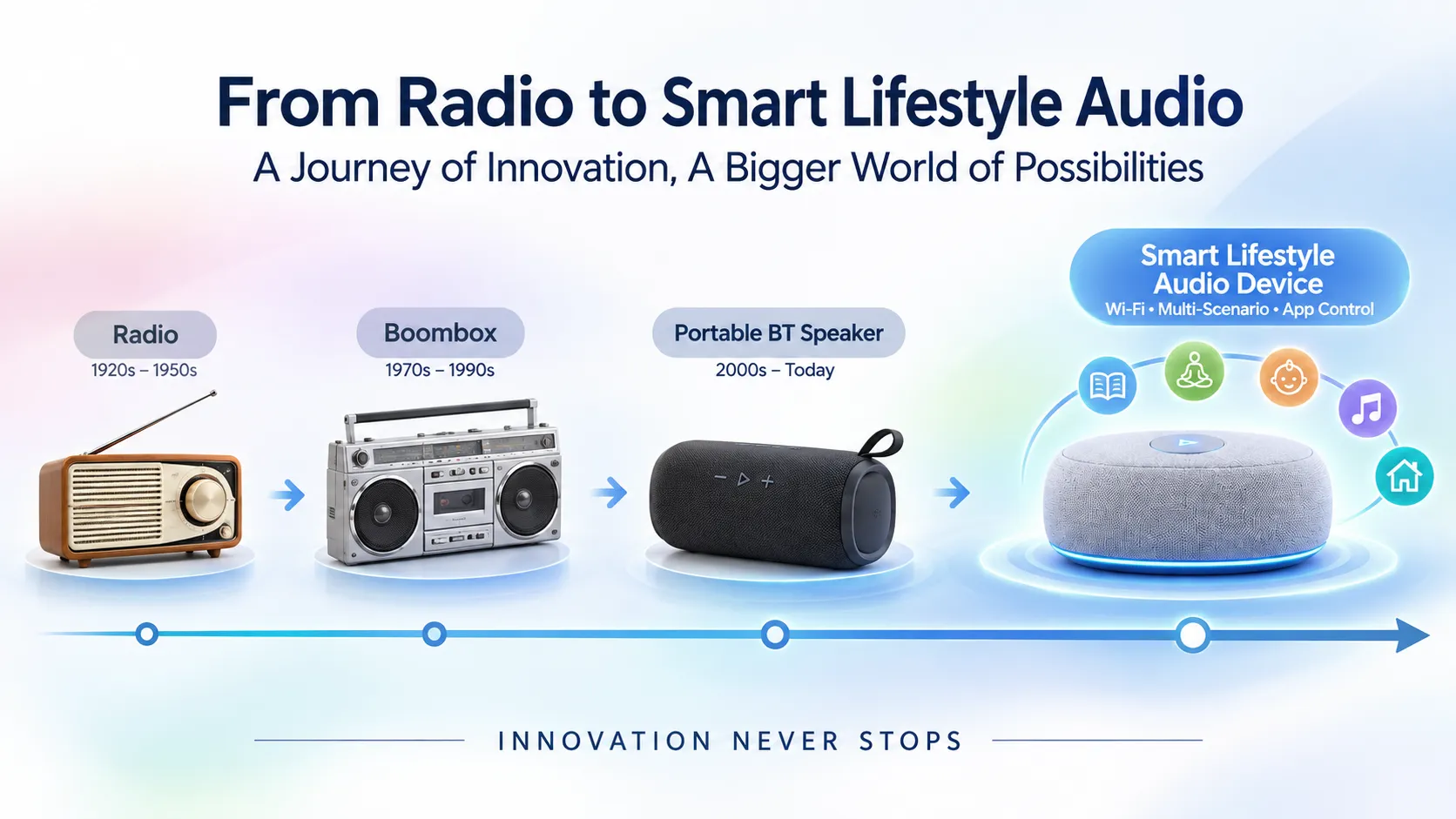
From Bluetooth Speaker to Smart Lifestyle Device
From Bluetooth Speaker to Smart Lifestyle Device:
How Wi‑Fi + App‑Driven Audio Opens New ODM Product Categories
For decades, strong acoustics have been our core advantage as a Bluetooth speaker and headphone ODM manufacturer. The speaker product journey stretches a long way: from radio, CD boomboxes, 2.0 / 2.1 / 5.1 home theatre systems, PA speakers, MP3 players, all the way to compact portable mini Bluetooth speakers.
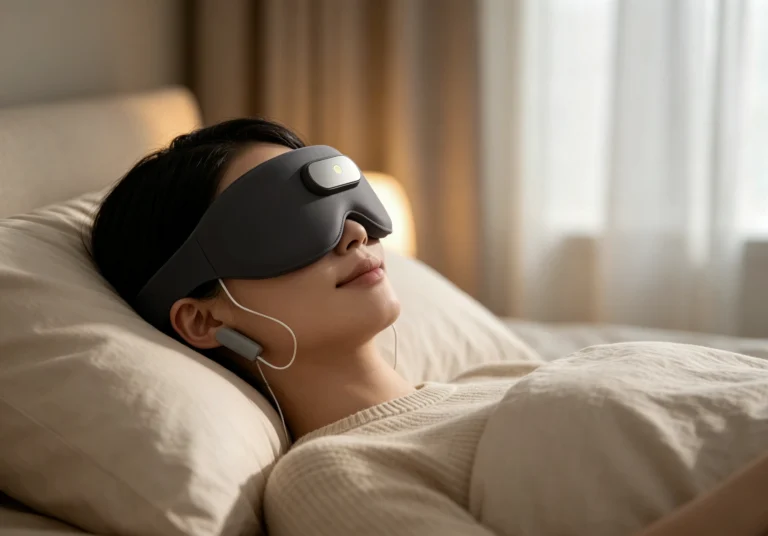
For a long time, the core requirement was simple: play audio well. Today, the market is shifting. Consumers no longer only ask for better sound. They want audio built around lifestyles, routines and emotional needs. Sleep, home wellness, children’s screen‑free play, education, deep work, study, travel, and calm rituals are driving the next generation of audio hardware.
This is the big difference: the phone is no longer just a remote source that streams music over Bluetooth to the speaker. The new model is Wi‑Fi + App + API content sync. Content — stories, guided sessions, curated albums, nature soundscapes — can be downloaded to the speaker, or streamed on demand without local storage. The most powerful value proposition here is screen‑free listening for children and families. Kids can enjoy high‑quality audio content without holding a phone or tablet.
Content is also changing. The old mindset was “more songs, more volume”. The new winning formula is curated, intentional audio. Less is more, rooted in minimalism: carefully selected content that fits a specific routine, mood or moment, rather than endless playlists.
The technical stack makes this possible. We connect web content libraries to the speaker through API configuration, secure handshakes, remote download, content editing, and full mobile App control. This is not just a speaker upgrade; it is a whole new content hardware ecosystem.
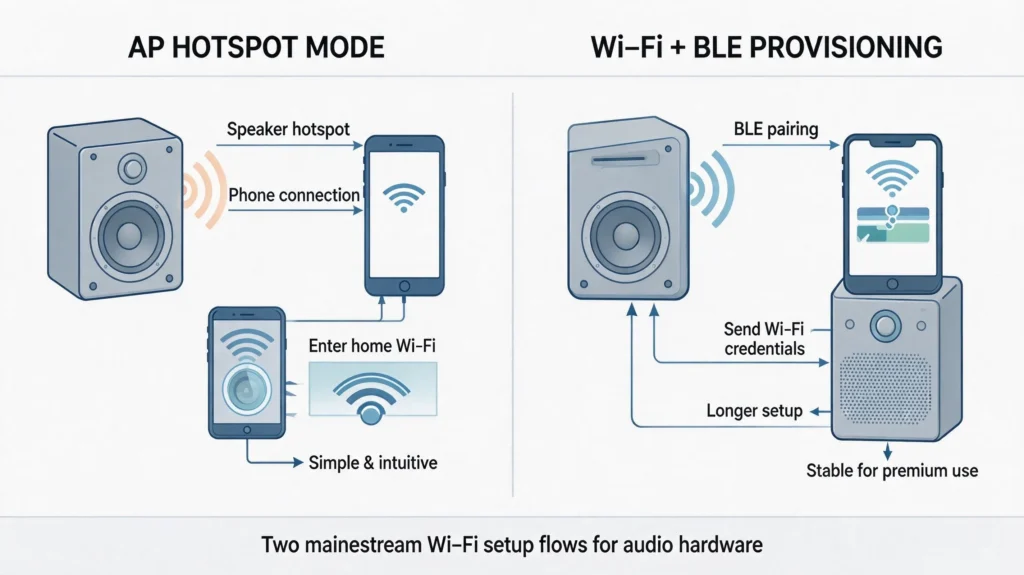
Two mainstream Wi‑Fi provisioning flows for audio hardware
When building Wi‑Fi enabled lifestyle audio, the onboarding flow decides whether your product gets good reviews or frustrated returns. We evaluate two standard approaches for our ODM partners:
1. Speaker hotspot mode (AP mode)
The speaker broadcasts its own temporary Wi‑Fi hotspot. The user connects their phone directly to this hotspot, then enters the home router credentials inside the App. This is intuitive, low friction, beginner‑friendly. It is the easiest route for mass consumer adoption, especially for storytellers, kids audio and wellness devices sold through retail channels.
2. Wi‑Fi + BLE provisioning
The BLE channel carries Wi‑Fi credentials from the phone to the speaker. This method is less intuitive for new users. Buyers often feel rushed, confused, and “hands‑on” during setup. It needs careful UX design, guided UI and user psychology built into the App to avoid drop‑off. The upside is long‑term stability, better power management and it is the direction the industry is moving for premium smart audio. Experienced ODM teams turn this from a pain point into a seamless setup flow.
A mature hardware platform can add extra trigger layers: NFC tap‑to‑connect, TF card / microSD local playback, and Bluetooth fallback. One hardware base can support multiple use cases, giving brands a flexible, multi‑SKU roadmap without re‑engineering the core acoustic and firmware stack.
The high‑margin lifestyle audio categories built on this platform
Our most proven and high‑volume project is the screen‑free storyteller. Beyond that, the same technical platform serves these verticals:
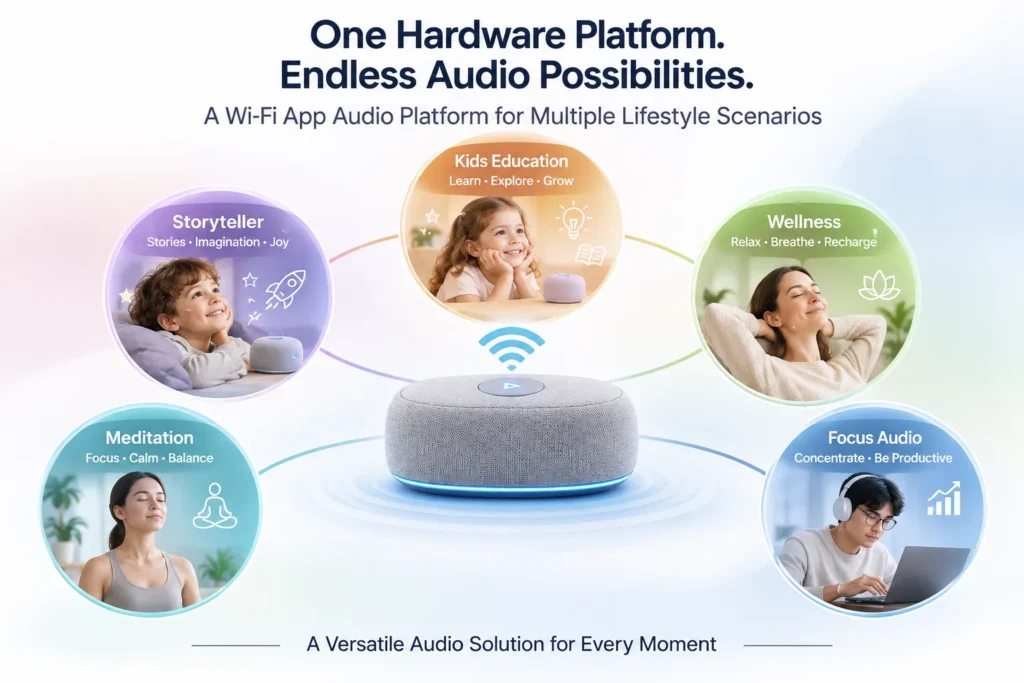
This is why these categories escape the race‑to‑the‑bottom pricing of generic Bluetooth speakers. Generic mini speakers compete only on wattage, battery and waterproof rating. Lifestyle audio competes on routine, trust, content curation and screen‑free safety — areas where brands can build stronger loyalty and healthier margins.
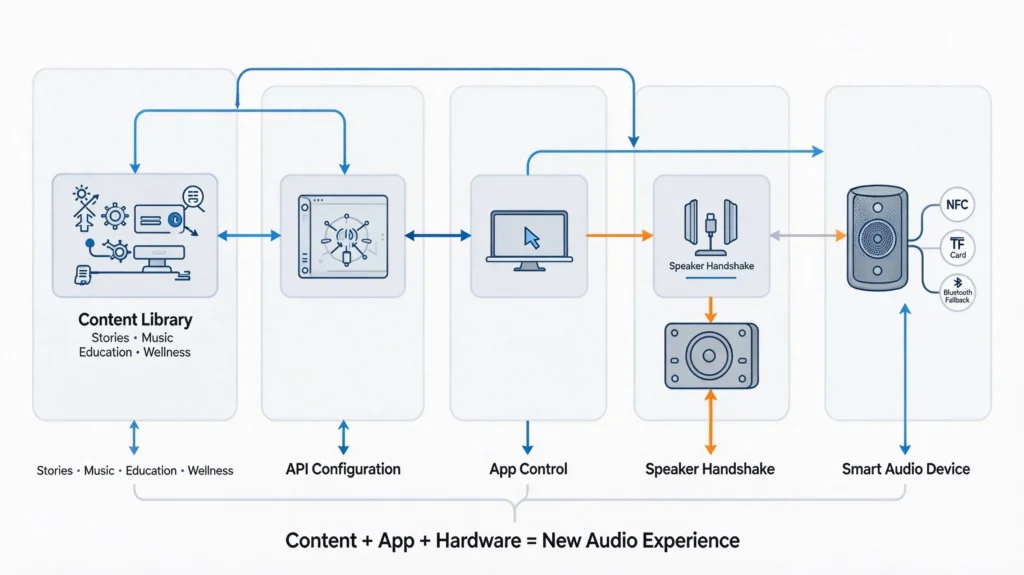
What this means for ODM brands
Acoustics remain the foundation. But the winning product of the future is not just a good‑sounding speaker. It is a sound device tied to a repeatable daily habit.
Brands that treat this as a content + hardware bundle will separate themselves from commodity Bluetooth audio. As an ODM partner, we bring the acoustic design, provisioning UX, firmware, API integration and multi‑trigger connectivity (Wi‑Fi, BLE, NFC, TF, Bluetooth) to turn lifestyle concepts into certified, mass‑producible hardware via our flexible OEM and ODM solutions.
Closing
The Bluetooth speaker is not dead. It is being reborn as a smart lifestyle device. The next wave of audio winners will not sell sound alone. They sell calm, routine, learning, rest and presence — delivered by great acoustics wrapped in seamless Wi‑Fi connected screen‑free hardware.
Internal link suggestions
If you are developing smart lifestyle audio concepts for your brand and want to discuss technical feasibility, content integration and product roadmap, feel free to discuss your next audio project with our engineering team.